

Finding your first 10 customers
You want partners, not guinea pigs.

Everyone’s V1 of their product kind of sucks; which is why finding the right first 10 customers is so important.
You’re looking for something more than customers. You want partners who will help you co-design your product because they care so much about the problem you’re solving.
In the early stages of your company, this feedback and partnership is invaluable.
Make your first 10 customers design partners
Early adopters understand that V1 of your product is a rough first draft, and they’re comfortable with that.
There’s a benefit for them: they get to help co-design your product. They have a real, tangible imprint on the roadmap and that matters a lot to some teams.
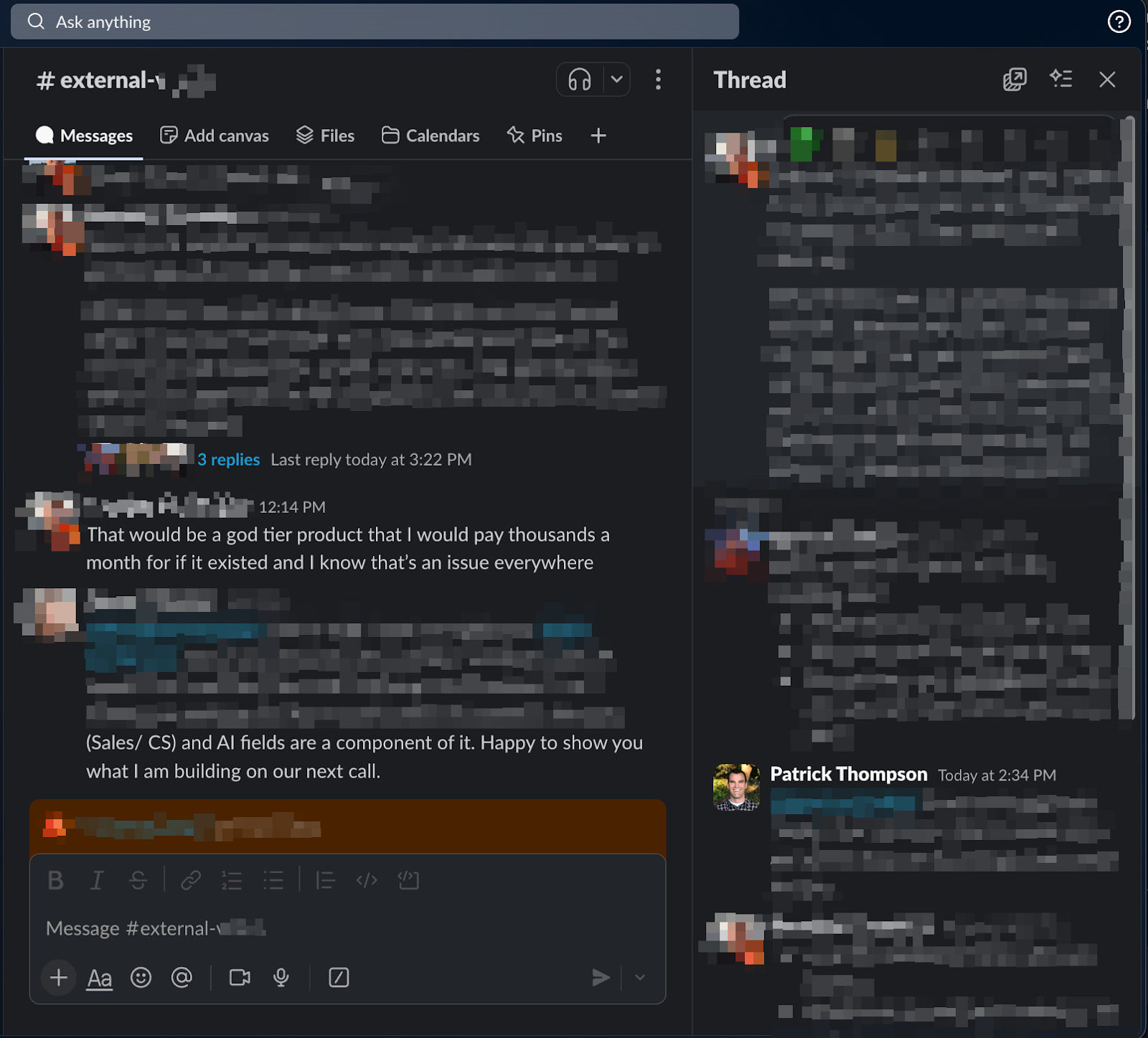
At Clarify, that looked like a shared Slack where customer feedback lived in public threads, so they could see what others were running into and how we were responding. We met regularly, walked through flows live, and iterated based on what we heard.
They’d see their feedback land in the product, with a clear “you asked, we shipped” trail.
We also set up a free early-access program. This resulted in high participation. The bar to join was time and candor.
To formalize that group, we set up a free early-access program. And by the time we launched publicly, we already had 50+ weekly active companies and ~100 active users. When we introduced pricing, most of them converted, proving that being part of the build drives long-term commitment.
Finding early-stage customer fit
Your first 10 customers make or break the company.
What matters isn’t who they are on paper, it’s whether their feedback makes your product better for the customers you want more of.
I learned that lesson the hard way.
At my last company, we landed Carta as our first enterprise customer. They were thoughtful, opinionated, and eager to be design partners, but their feedback didn’t match what we were hearing from smaller customers, so we ignored it.
A year later, we realized they were right on almost every point. They saw the market further down the road than we did, and that mistake cost us.
Now, I’m more deliberate about who I bring in early and how I qualify them. It’s a founder’s job to make sure those first users are ready for the messy, feedback-heavy early phase.
The three things I screen for:
Do they try new tools?
Have they bought from startups before?
Will they show up weekly?
If not, they’re not early-stage customer fit.
Customer discovery is the never-ending story
Even today, we still run customer interviews at Clarify every week. We bring that feedback into our weekly team all-hands. We talk about problems in public more than solutions, so we don’t bias the conversation. We meet our ideal customers where they hang out.
We ask a lot of questions.
Then, we listen.
Discovery isn’t limited to your first customers or your sales process, and it never, ever ends.
Until next time,
Patrick
Additional reading
Levels of PMF by First Round Review. Especially pay attention to the first section.
The Hard Way Pays Off: Inside Sierra’s Design Partner Strategy from First Round.
P.S. If this hit, forward it to one founder who’s in the thick of it. I’ll be back next week.