

Getting pricing right in the AI era
The hardest question in startups right now.

👋 to the 5 new founders who subscribed this week! If you were forwarded this, join 205 founders on this weekly journey with us:
Pricing has always been tough.
But pricing an AI product is one of the harder problems I’ve worked on in a while - and one of the most uncomfortable. And I’ve heard the same from a bunch of other founders.
There’s no proven playbook yet. The SaaS pricing models most of us grew up with don’t map cleanly to AI, and getting it wrong feels higher-stakes because you’re not just setting a price, you’re setting the mental model customers will use to evaluate whether your product is worth it.
When founders ask me about pricing their first AI product, they’re usually trying to choose between a few directions, and they want to pick the one that won’t bite them later. I get it. I’ve been on both sides of that decision.
At Iteratively, we waited too long to get crisp on pricing and packaging. We had demand, but the story wasn’t tight. Deals dragged, sales cycles got longer than needed, and it slowed us down more than I expected. That experience stuck with me
At Clarify, I decided to take a firm point of view earlier, even knowing it wouldn’t be perfect. I’d rather be wrong and adjust than slow down too much trying to get it exactly right.
Seat-based pricing breaks with AI
Seat-based pricing made sense when software value scaled with how many people logged in. AI doesn’t work like that. The value doesn’t come from access; it comes from how much work the system does for the customer: sending emails, updating records, writing briefs, following up, etc.
At Amplitude, we paid in the six figure range for Salesforce, and only about half the company had seats. Everyone else still depended on the data, but pricing was tied to logins instead of value. That always felt backwards to me, and with AI it breaks completely.
Charge when the AI does work
At Clarify, our CRM is free to use and free to seat because everyone should be able to access the data. We only charge when our agent actually does something useful, like sending emails, updating deals, generating briefs, or following up with customers automatically.
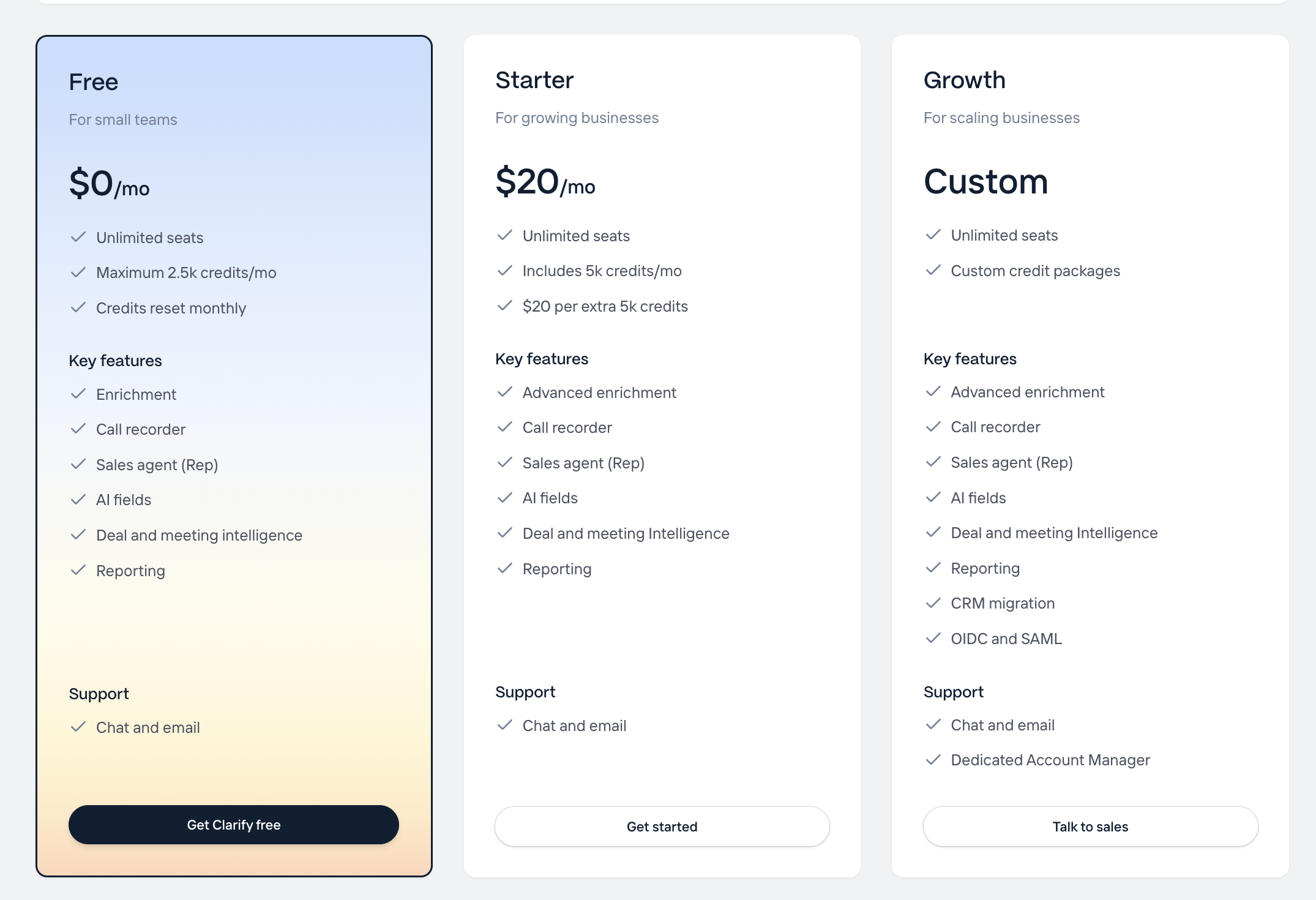
Internally, we price the agent, not the record management. Record management is heading toward zero across most apps, so pricing power ends up sitting in automation.
Our pricing story is simple on purpose: you only pay when the system does work on your behalf. If it doesn’t save time or help drive revenue, your bill doesn’t go up.
That clarity took longer to find than it sounds. We went back and forth internally and debated whether free seats would devalue the product, whether pure usage would scare off early customers, whether we were overthinking it. Eventually we landed on a position we believed in and committed to defending it. But it wasn’t obvious at the time.
Usage-based pricing creates tension, and that’s okay
Customers worry about unpredictability and burning through credits, and those concerns are fair. We’ve heard it on calls. Prospects like the product but hesitate on usage pricing because they’ve been burned by surprise bills from other platforms, or they just want a number they can budget against.
I won’t pretend that it doesn’t create friction in the sales process. It does. It forces harder conversations earlier. But I’d rather have those conversations than charge per seat and quietly know we’re monetizing access instead of value.
I don’t think the long-term answer is pure usage pricing. The steady state is likely a hybrid:
A base platform fee or light seat fee for predictability
A generous included AI allowance, so teams don’t feel constrained,
Usage or outcome-based charges at the edges for power users.
We’re still figuring out exactly where those lines sit. A lot of today’s push toward usage pricing is still driven by vendor cost uncertainty. Inference isn’t free, and vendors don’t want to absorb unknown workloads. Over time, pricing should move closer to clean value alignment, even if the market isn’t fully there yet.
We’re not there yet either, and I think any founder who tells you they’ve nailed AI pricing is probably full of shit.
Pick a clear story early
One of my biggest lessons from past companies is that endless tweaking slows you down. It slows sales because reps can’t explain it cleanly. It slows onboarding because customers don’t know what they’re paying for. It slows product decisions because you’re designing around pricing constraints instead of customer value.
At Clarify, we picked a point of view early: no seat-based pricing, and a simple promise that you pay when the AI does work. That tight story gave customers a clean mental model and moved our go-to-market faster than trying to optimize every tier.
I won’t say we never second-guessed it. There were stretches where the market seemed to want something more traditional and I wondered if we were being stubborn instead of principled. But every time we pressure-tested the alternative, seat-based pricing felt like it would optimize for short-term comfort at the expense of long-term alignment.
Where this goes
I expect most AI products to trend toward cheap or free seats, with pricing power concentrated in automation and agents. Big incumbents are already experimenting with consumption models, and I think that’s an early sign of where the market is headed.
You can see this rise from this chart below from a Growth Unhinged article.
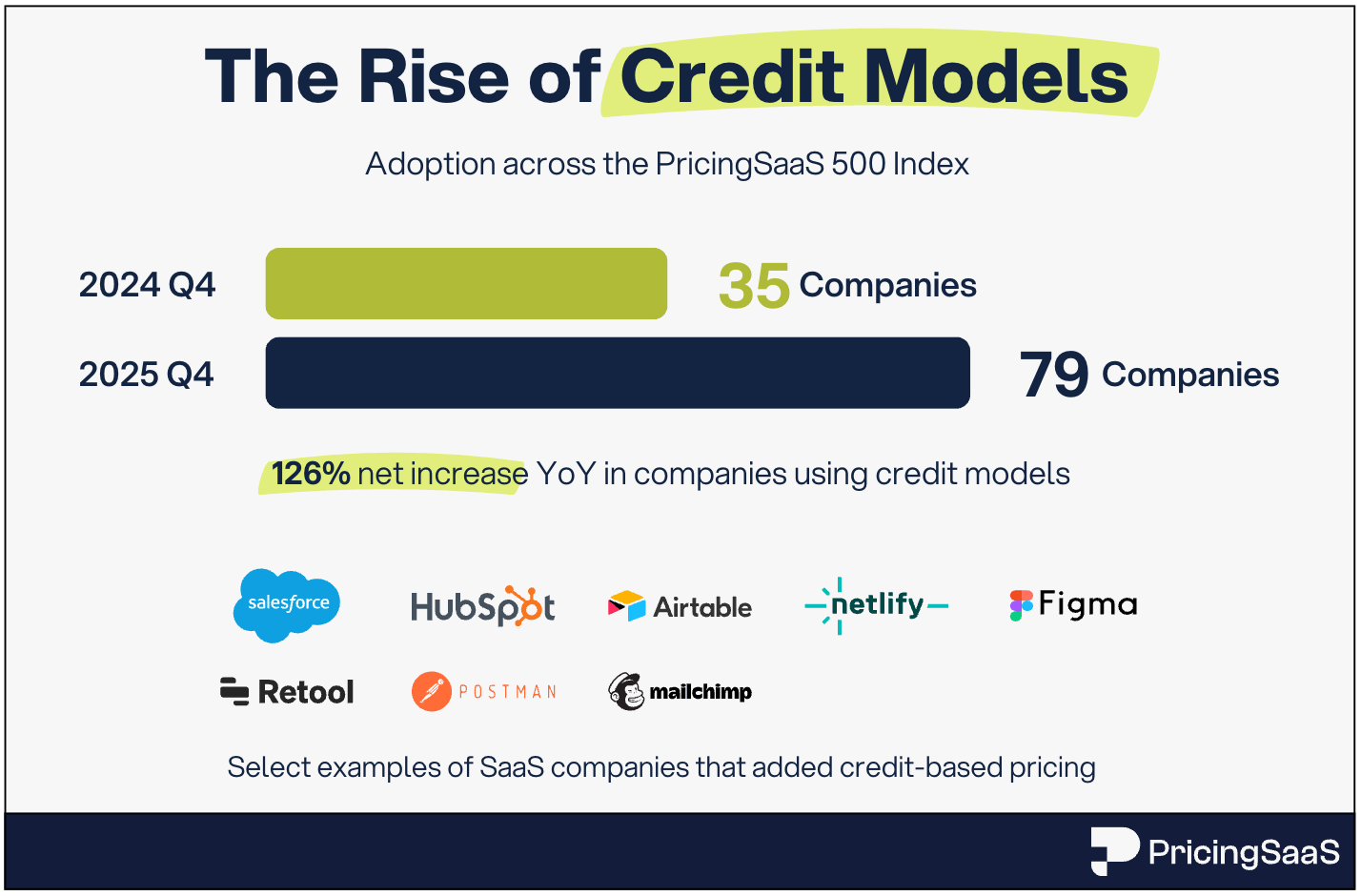
There are two paths from here. Either existing platforms deeply change how they deliver and price value, or new platforms bundle AI end-to-end and replace chunks of the stack. Either way, pricing moves closer to usage and outcomes.
Start with the work your system does and the value that work creates. That’s the part that lasts. And if it feels uncomfortable to commit to a pricing model before you have all the answers. That’s normal. You’re not going to have all the answers. Pick the story you believe in and be willing to defend it while you learn.
Still working this out on our end, and would love to hear any advice you all have on this.
Until next week,
Patrick
Additional reads
What’s working in SaaS pricing right now - Growth Unhinged
Pricing in the AI era - Sequoia podcast