

Lessons from 2025
What me and our team learned about swinging bigger, hiring better, and building leverage.

If you were forwarded this newsletter, join 150+ founders going on this weekly journey with us by subscribing here:
Hey everyone 👋
Hope you are enjoying the Holidays.
This is the last post for the year, so I wanted to do something a little different. I’m not big on prediction posts. No one actually knows what’s coming. But I can share what I learned this year and what I’m betting on for 2026. I also asked a few people on the team how their work evolved. Their answers surprised me.
This year pushed me harder than any before it. I demanded more from myself and the team, made mistakes, and learned where I was wrong. It wasn’t clean, but we made real progress.
I’m more confident today than I was in January. We’re doing more with a higher bar, and we’re getting better at doing it together. I see the gaps more clearly now and I’m excited to try to close them.
Here’s what stuck with me.
What I learned in 2025
1. More is more
There’s a popular belief that startups should ruthlessly narrow their focus—pick fewer things and go deep. It sounds smart. Sometimes it’s necessary.
But this year I leaned the opposite direction:
We spun up more marketing channels
We ran more product experiments
We shipped in parallel, not sequentially
This was a deliberate shift. At Iteratively, my last company, we were playing not to lose. Every decision was about survival.
At Clarify, we’re in the most competitive market in software. Playing it safe doesn’t win. We needed to take bigger swings.
So we resourced the team to do more while keeping the bar high. That doesn’t mean chaos. It means capacity.
It means pushing while staying healthy (no 996, here) and holding quality.
It’s harder. But I don’t want to play defense and look back in a year at all the swings we didn’t take.
2. Everyone has to play as a team
Hiring strong people isn’t the ultimate answer. The hard part is making sure they work well together.
That’s the tradeoff with A-players. They’re incredible talents who are used to pushing hard and getting their way. This works early on. It breaks as the team grows.
Team > individual. Always.
I keep coming back to vector alignment. Everyone rowing in the same direction matters more than how hard each person rows alone.
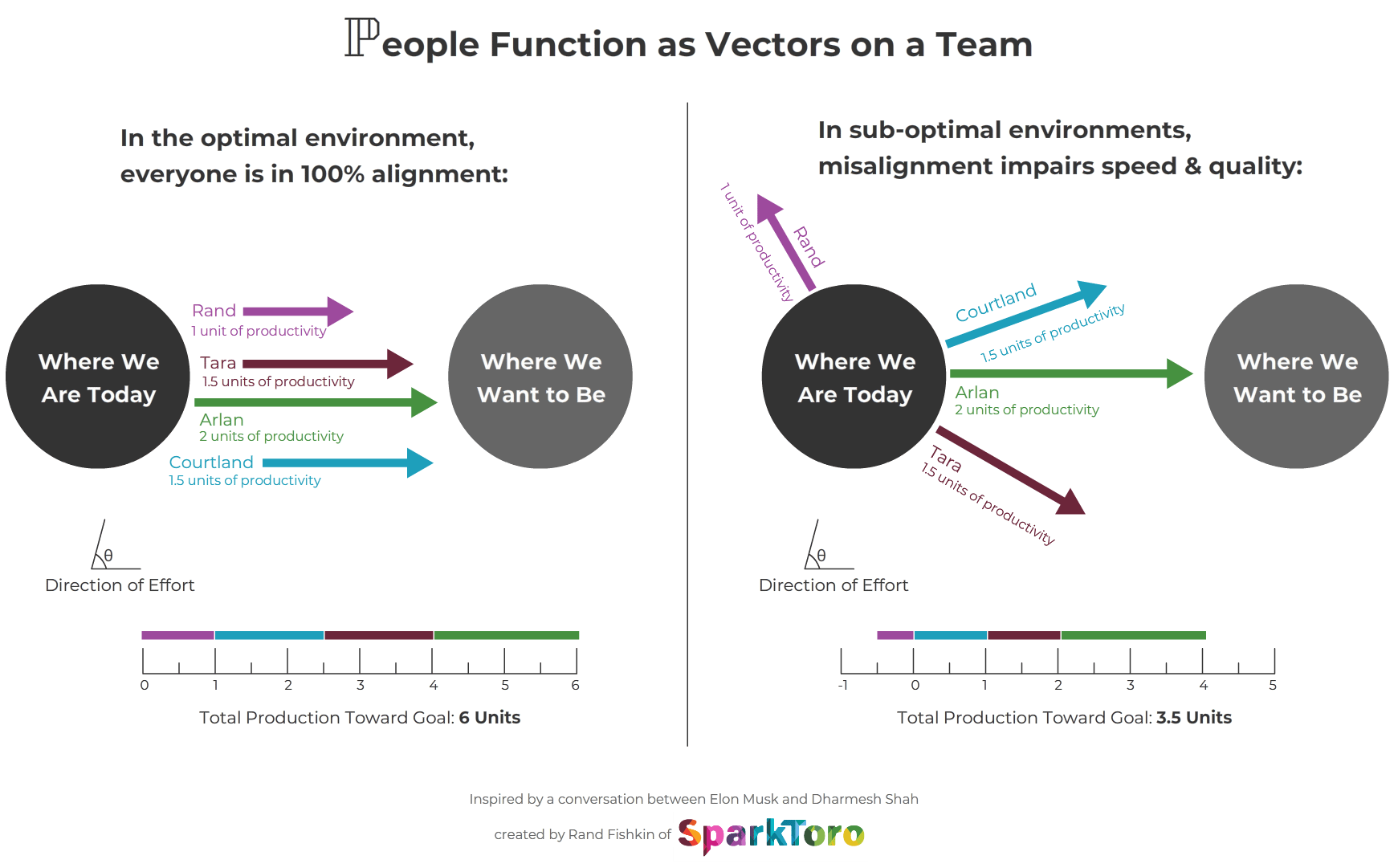
So I’m screening harder for values and team fit, not just the resume. That’s the culture work: aligning on how we win together, not as a collection of solo stars.
3. Automate or drown
I’m pushing myself and the team to systematize and automate where we can. You can’t automate everything, and sometimes you should do things that don’t scale.
But the company only scales if each of us finds leverage in our role.
I’ve been hands-on with AI for this. I try tools, see what helps, and fold it into how we work. The goal is simple: more output at a high bar, without burning people.
A simple example is creating a bug in Linear via Slack, then using Cursor to investigate it — all from the same place.
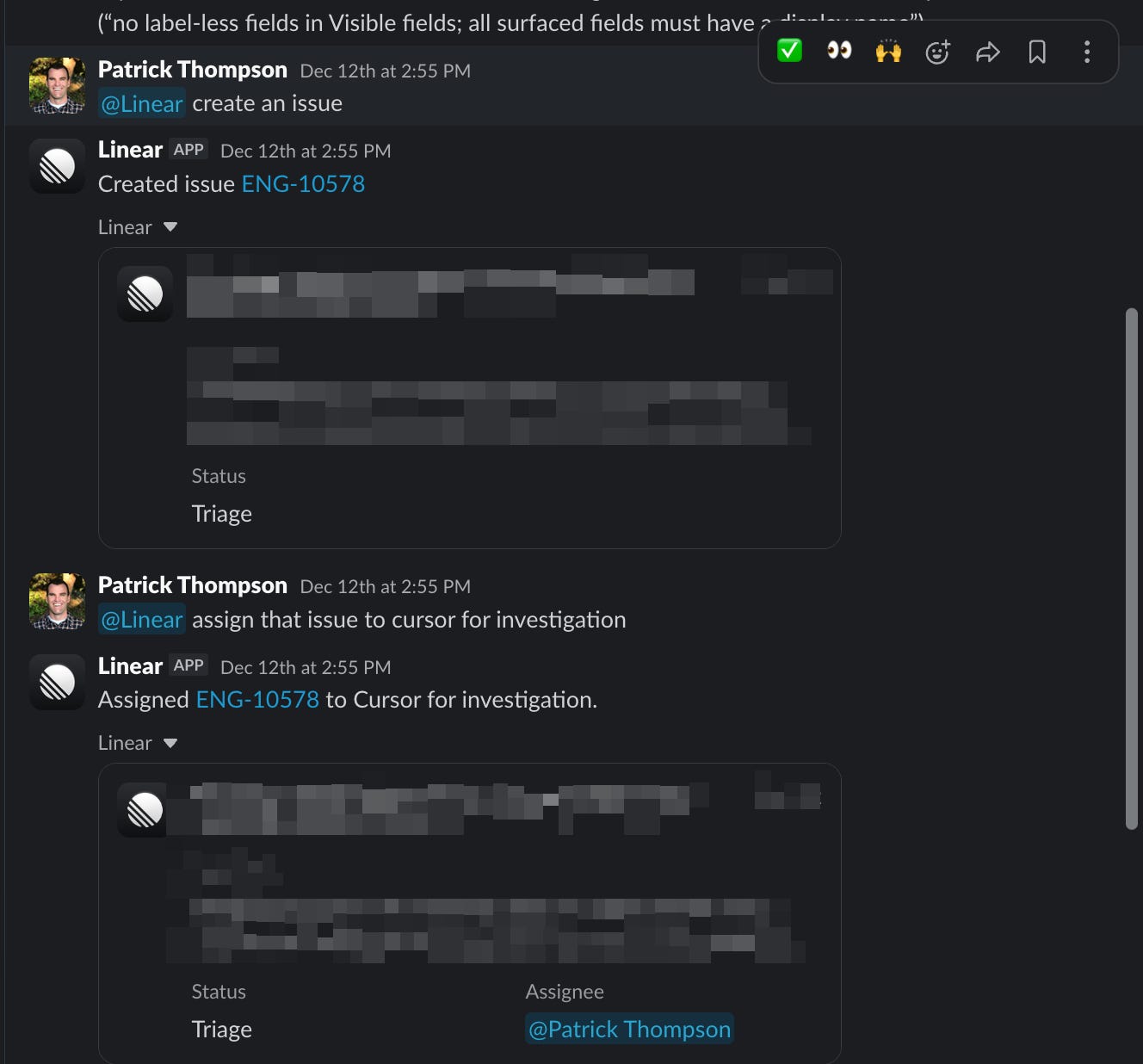
How some of our team changed the way they worked this year
Helen Xue, Head of Operations
“I’ve entirely cut out pinging teammates asking them ‘Who did you last speak to?’, ‘What did you learn?’, ‘What are the next steps?’. Now I can self-serve the most up-to-date information on any customer using Rep from Clarify.”
As companies add AEs, CSMs, and engineers who all touch accounts, operations needs one place to see what was said, what was learned, and what’s next.
I love the way Helen is thinking through this: check the system first, then search transcripts or a summary to get the details. This frees our sales team to stay focused on their job, and Helen to get the exact info she needs immediately.
Matt Hodges, Head of Marketing
“I don’t see myself going back to traditional report building.”
Matt has, like a lot of us, gotten more comfortable leveraging AI for his job, specifically for generating and refining reports.
Reporting was taking him hours and pulling his focus away from where he really shines in strategy and storytelling. Now, it takes minutes, and the built-in memory of the GPT he uses helps our reports tell a bigger story over time.
Travis Strickland, Head of GTM
“My gut has closed a lot of deals. It’s also caused me to waste a lot of time.”
For previous sales’ roles, Travis relied on intuition to close deals. But joining Clarify pre-revenue forced him (and us) to slow down and line up the facts before we moved. A bunch of “obvious” calls changed once we looked at the numbers together.
We cut time on free users, edge cases, and feel-good engagement, and put that time into accounts that actually move us forward.
His rule we use now: if the data doesn’t make the decision a little harder, you’re probably using it wrong.
How I’m ending the year
When I drift toward doing less, I come back to the plan: do more work, keep the bar high, and do it together.
When hiring, I ask if this person lifts the team, not just a metric.
If I catch myself repeating a task, I fix the system so it’s one-and-done.
I’m also learning from the team. Helen pushed us toward self-serve customer context, so ops isn’t pinging people for status. Matt made prompt-first reporting the norm, so we spend time on decisions, not spreadsheets. Travis set the tone on data before gut, so we put time into accounts that actually move us forward.
This path made us sharper this year, and it’s the path I’m taking into 2026.
I’d love to hear how your 2025 went and what you’re looking forward to in 2026. Happy New Year!
– Patrick
Additional reads
12 Predictions for 2026: Tomasz Tunguz - I know I said I don’t typically like prediction posts. But Tomasz gets it right more than he gets it wrong.